


Are You Making These Common Florida Flood Insurance Mistakes?
- mdugan23
- Apr 12
- 5 min read
If you’re currently packing up your life in Queens, Long Island, or the Upper West Side to head south, you’ve probably got a massive "to-do" list. You’re thinking about the movers, the change of address, and exactly how many pairs of shorts you need to buy.
But there’s one topic that often gets pushed to the back burner until the very last minute: Flood Insurance.
Coming from New York, you might think of flooding as something that only happens during a once-in-a-century event like Superstorm Sandy. In Florida, water is part of the lifestyle. We love being near it, looking at it, and jumping in it. But we also have to respect it.
At Michael Patrick Dugan PA, I help New Yorkers make the transition to the Sunshine State every single day. I see the same mistakes over and over again when it comes to insurance. Because the rules here are different than they are in New York, it’s easy to get tripped up.
Let’s walk through the most common Florida flood insurance mistakes so you can protect your new home in Boca Raton, Delray Beach, or Fort Lauderdale without any nasty surprises.
Mistake #1: Assuming Your Homeowners Policy Covers Floods
This is the biggest, most expensive mistake you can make. In New York, your standard homeowners policy might cover a pipe bursting in the wall. You might assume that if water gets into your house in Florida, you're covered.
Wrong.
Standard homeowners insurance policies, whether you're in Lake Worth or Manhattan, almost never cover "rising water" from the outside. If a storm surge hits Pompano Beach or a heavy tropical downpour causes a canal to overflow into your living room, your regular insurance company will likely deny the claim.
To be protected, you need a separate flood insurance policy. Most of these are handled through the National Flood Insurance Program (NFIP), though private options are becoming more common in Florida.

Mistake #2: The "I'm Not in a High-Risk Zone" Trap
When New Yorkers look at homes in Florida, they often ask, "Is this in a flood zone?"
The truth? Everywhere in Florida is a flood zone. The real question is whether you are in a high-risk zone or a low-to-moderate risk zone.
Many buyers think that if their lender doesn’t require flood insurance (which usually happens in "X" zones), they don’t need it. This is a dangerous gamble. According to FEMA, about 25% of all flood insurance claims come from areas that are considered low-to-moderate risk.
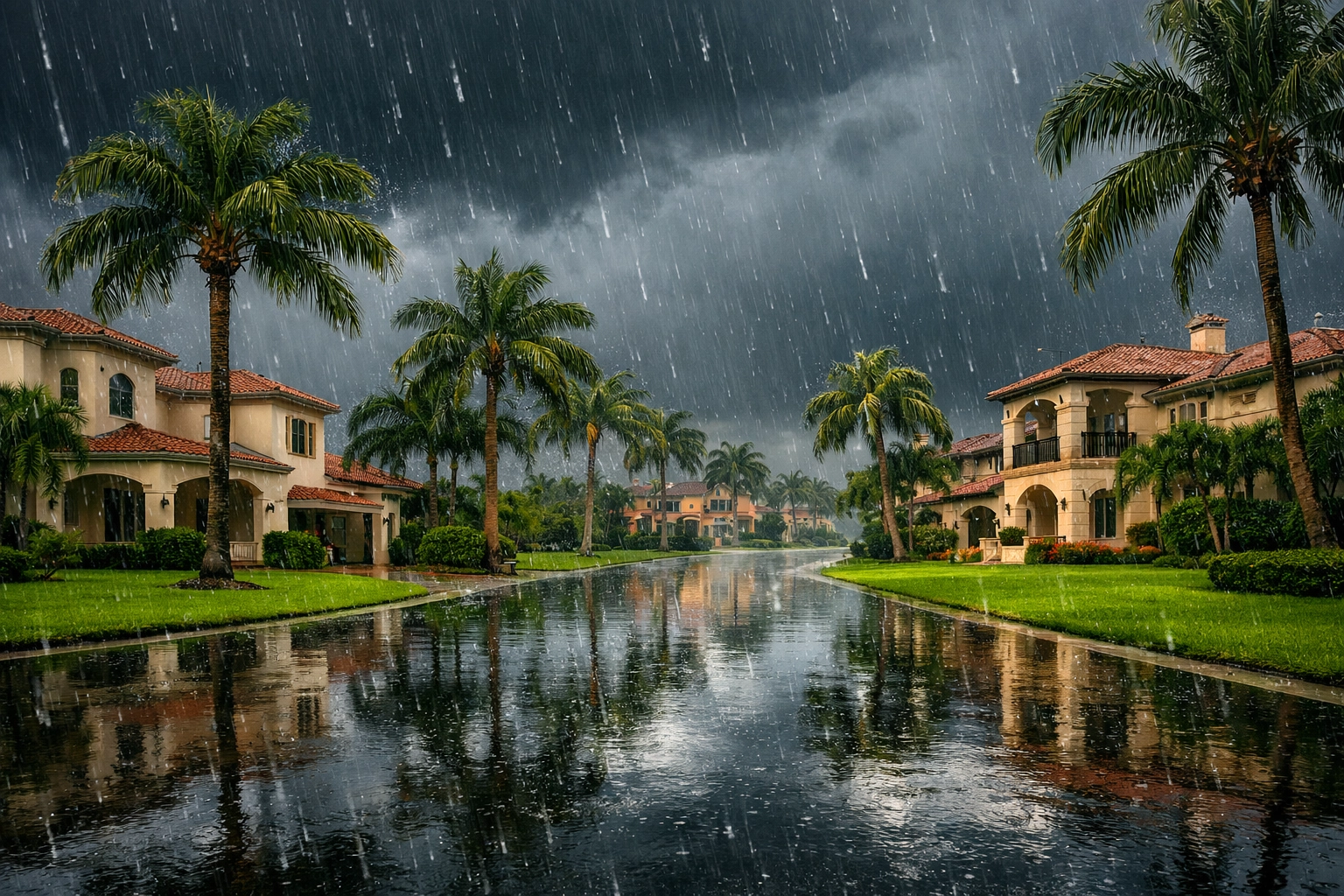
Think about it this way: Florida is flat. If we get 10 inches of rain in a few hours, which happens more often than you’d think in places like Deerfield Beach or Boynton Beach, that water has to go somewhere. If the local drainage system gets overwhelmed, even a "low-risk" home can end up with two inches of water in the kitchen.
And here is a scary stat: just one inch of water can cause more than $25,000 in damage to your home. Taking the risk to save a few hundred dollars a year on a premium just isn't worth it.
Mistake #3: Waiting Until the Last Minute (The 30-Day Rule)
In New York, we’re used to getting things done fast. You want a pizza at 3:00 AM? You got it. You want to buy a car and drive it off the lot? Done.
Flood insurance doesn't work like that.
Most flood insurance policies have a 30-day waiting period before they become effective. You cannot wait until a tropical storm is brewing in the Atlantic and then call me to say, "Hey Michael, I think I need that flood insurance now." By then, it’s too late.
The exception to this rule is if you are purchasing a new home and the insurance is required by your lender for the closing. In that case, the 30-day wait is usually waived. But if you’ve already moved in and decided to "wait and see," you’re playing a risky game during hurricane season.
Mistake #4: Underestimating the Cost of Replacement
When you set up your policy, it’s tempting to look for the lowest possible premium. To do that, some people underinsure their property or choose a massive deductible.
If you’re moving into one of the beautiful 55+ communities in Boynton Beach or a luxury condo in Boca, your "stuff" is likely worth more than you think. Flood insurance typically has two parts: coverage for the structure of the house and coverage for your contents (your furniture, clothes, electronics, etc.).
Make sure you actually sit down and estimate what it would cost to replace everything. Don't just pick a random number to lower your monthly bill. If a flood ruins your custom kitchen cabinets and your designer furniture, you don't want to be left holding a bill for $50,000 because you tried to save $100 on your premium.

Mistake #5: Not Checking the Flood Maps Personally
FEMA updates their flood maps periodically. A house that was in a low-risk zone five years ago might be in a high-risk zone today because of new construction nearby or changes in local topography.
Before you put an offer on a house in Fort Lauderdale or Lake Worth, check the FEMA Flood Map Service Center. As your Realtor, I can help you navigate this, but it’s always good for you to see the maps with your own eyes.
Knowing the "Base Flood Elevation" (BFE) of a property is vital. If the house is built below that elevation, your insurance premiums will be significantly higher. If it’s built above it, you’ll sleep much better during a thunderstorm.
Mistake #6: Forgetting About "Loss of Use"
Here is something many out-of-state buyers don't realize: Most NFIP (federal) flood policies do not cover "loss of use."
What does that mean? It means if your home floods and you have to live in a hotel for two months while the drywall is replaced and the mold is remediated, the insurance company isn't paying for that hotel. They are only paying to fix the house.
This is where private flood insurance can sometimes be a better deal, as some private policies include additional living expenses. When you’re moving from New York, you might not have a local family member’s couch to crash on, so having a plan for where you’ll stay is crucial.
Tips for New York Buyers Moving to Florida
Ask for the "Elevation Certificate": When you find a house you love, ask the seller if they have an elevation certificate. This document tells the insurance company exactly how high the house sits compared to the estimated flood waters. It can save you thousands on insurance.
Look at the Drainage: When you’re touring homes in Delray Beach or Boca, don’t just look at the granite countertops. Look at the yard. Does it slope away from the house? Are there storm drains nearby?
Talk to a Local Agent: Don't just use your guy in New York who handles your car insurance. You need a Florida-based insurance agent who understands the specific risks of Southeast Florida.
Consider the "Secondary Home" Factor: If you’re keeping your place in NY and using the FL home as a seasonal residence, your insurance requirements and costs might be different.
Why It Matters for Your Move
Moving to Florida should be about the sunshine, the lower taxes, and the relaxed lifestyle. It shouldn't be about worrying every time the clouds turn grey.
At Michael Patrick Dugan PA, I don’t just show you houses. I help you understand the "total cost of ownership" in Florida. Whether you’re looking at a quiet 55+ neighborhood in Boynton Beach or a waterfront spot in Pompano, I’ll make sure you have the right info to make a smart decision.
Don't let a flood insurance mistake turn your Florida dream into a soggy nightmare. Let’s find you a home that’s as safe as it is beautiful.
Ready to start your search for the perfect Florida home? Give me a call, and let’s get you out of the New York cold and into the Florida sun!



Comments